Changemaker in focus
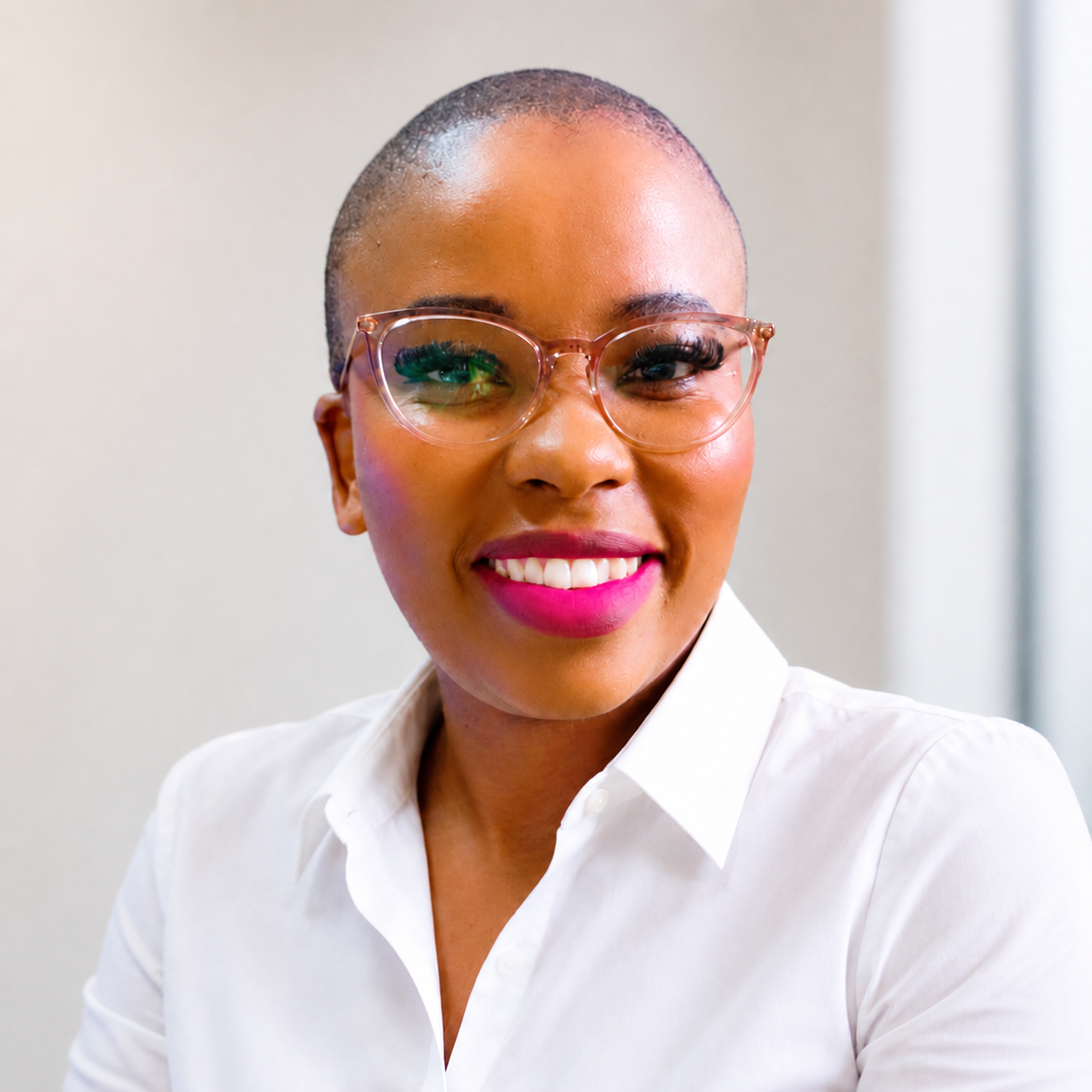
Noxolo Liwani
Local Economic Development Officer | Overstrand Municipality
My purpose is simple: to help drive out inequality, poverty and unemployment, one opportunity at a time.
She came to Hermanus for a weekend away and never left, opening doors for traders, growers, designers and school-leavers with real talent and nowhere to take it.
Thirteen years of building opportunity in the Overstrand
There are two Overstrands, and most visitors only ever meet one: the cliff path, whales in Walker Bay and the Hemel-en-Aarde wine farms. But behind that postcard view are informal traders, growers, young people looking for their first opportunity and local families building livelihoods with determination and skill.
That distance is where Dignity to Rise works. In the first Changemakers of the Overstrand conversation, Noxolo Liwani shares what has kept her working to close it: practical opportunities, reliable partnerships and a belief that people should be able to build a future where they live.
Tell us about yourself. What inspired you to make a difference?
I am a young, vibrant woman who came to Hermanus for a weekend away and fell in love with it: a place where I found beauty and peace, and one that resonated with where I come from. More than anything, I saw real potential for growth and opportunity.
It was only later that I witnessed the stark divide between coastal wealth and township poverty: brilliant, talented local youth who lacked access to the very spaces where their lives could change for the better. I saw local women baking vetkoek, tending endless braai fires and selling second-hand clothes along the pavements, all trying to make ends meet. That gave me a different lens through which to see the Overstrand: a place of great beauty and potential, but with a deep societal and lifestyle gap.
I was inspired to step up when I realised that talent in the Overstrand is evenly distributed, but opportunity is not.
I have spent over thirteen years working in local economic development and community-facing roles at Overstrand Municipality, starting in an administrative support capacity and growing into a role that today spans SMME and enterprise support, informal economy management, investment facilitation, sector development across tourism, agriculture and fisheries, job creation through EPWP, and partnership brokering with organisations.
What has kept me in this space isn't the paperwork. It's the people behind it: the SMME owners trying to formalise a small business, the EPWP participants looking for a foothold into steady work, and the community members who simply want to be heard by their municipality. That's what pulled me toward this work, and what keeps me showing up for it every day.
What project are you most proud of, and why?
The opening of the Multi-Purpose Centre at the New Harbour.
We didn't just hand out aid. We created a space where local youth could build their own future, where vendors and crafters were given dignity and a proper place to trade, and where free WiFi and computers gave people access to opportunities they otherwise couldn't reach — whether that meant applying to a tertiary institution, registering a business or applying for funding.
Beyond that, I've had the privilege of walking alongside many emerging entrepreneurs and watching them grow: sourcing industrial machines for fashion designers, cooking equipment for caterers, training and skills development for traders, start-up equipment and training for emerging plant growers, and funding and Asset Assist applications for trading stallholders. One outcome I'm especially proud of is a mushroom grower who, through collaboration and partnership, built a genuinely successful enterprise.
I've also helped establish a unit supporting local artists, musicians and crafters, creating cultural events that give young people a real path to pursue their goals in the arts and culture space. And I supervise a unit supporting emerging farmers, where I used EPWP grant funding to place a qualified graduate on the ground to give farmers direct, accredited technical advice and support.
That work was recognised when I was awarded by the province as the top achiever for exceeding set job-creation targets. But the number that matters most to me is the people behind it and how many of them are still building on what they started.
If you could make one big change in the Overstrand, what would it be?
I'd want to see informal economic activity — small-scale agriculture, informal trade and emerging enterprises operating outside formal zoning or business structures — properly bridged into the formal economy, rather than left in a grey area where it is neither supported nor regulated.
Right now, many people doing this kind of work carry real economic value for their households and communities. But without a pathway to formalise, they can't access funding, they can't be protected by proper land-use planning, and the municipality can't plan around them either.
I'd want to see a coordinated approach: LED, Town Planning, Environmental, Property Management, Infrastructure, private partnerships and ward-level structures working together to identify these activities, understand what people actually need, and build a real path toward formalisation or, where appropriate, alternative livelihood support.
What would you say to someone who wants to help but isn't sure how?
Start local and start small.
You don't need a title or a big platform. Most of the change I've seen happen in this space starts with someone showing up to a ward committee meeting, volunteering time with an existing community organisation, or simply listening to what people in their own area actually need before deciding what to offer.
Municipalities and NGOs are almost always looking for people willing to help with practical, unglamorous things: documentation, mentoring, translation, access to spaces, and bridging the gap between the CBDs and local communities. That's often where the real impact starts.
The main thing is not to wait until you feel fully qualified. Get involved where you are, and the direction usually becomes clearer once you're in it.